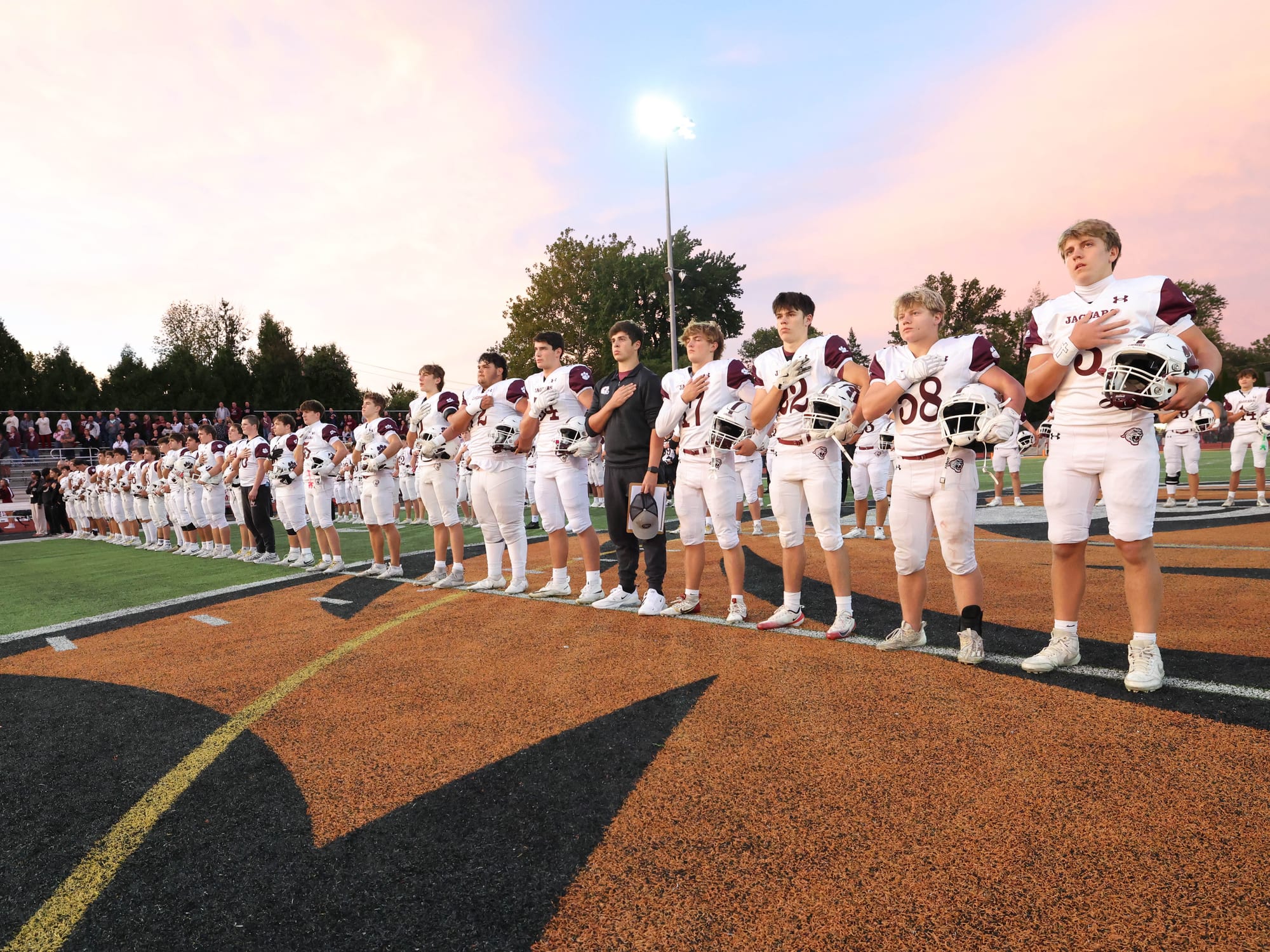
We are now three weeks into the school year at Garnet Valley High School, and that also means that fall sports are in full swing!
As most people know, athletics here are very popular among the student body. Whether it's football, swimming, or lacrosse. There is always a sporting event to watch, no matter the time of year. Thankfully, we are lucky enough to have two athletic trainers who are determined to keep GV athletes safe and healthy. Hilary and Brandon work around the clock, taping, stretching, and answering questions for athletes across the various sports teams. Last week, they were guest speakers at the first meeting of the Garnet Valley Varsity Club. While they were there, they talked about the importance of nutrition, hydration, and sleep. You might think that it was as simple as eating before you play, but it goes much deeper than that. Your body actually needs you to start fueling way in advance. Eating a snack before a game is helpful, but also having breakfast, lunch, and dinner is crucial to game-day performance. Nutrition: a meal should include 1/3 plate of vegetables or fruit, 1/4 should be protein, and 1/3 should be carbohydrates. For example, you should have 1/3 a plate of broccoli, 1/3 a plate of pasta, and 1/4 a plate of chicken for a good, balanced dinner after a long practice. Good pre-game snacks that Brandon recommended were pretzels, apples, and peanut butter. If you participate in back-to-back games or events, he also recommended energy bites or waffles; these will help fuel you through long competitions by replacing what you have already burned off.
Did you know that you have to start hydrating up to three days in advance? That's right, three days. That's drinking water, not energy drinks or sodas. Water and electrolytes can be your best friend. On average, it is recommended to drink 400–600 mL (11⁄2–21⁄2 cups) of fluid 2–3 hours before activity, 150- 300 mL (1⁄2–11⁄4 cups) of fluid every 15–20 minutes during activity, and 250–500 mL (1–2 cups) of fluid after activity.
Hydration does not always mean sports drinks either. Sports drinks are recommended for athletes participating in competition that lasts over an hour or causes you to sweat a lot. Drinking water is just as important.
They talked about how sleeping is important too; it is recommended that young adults get 7-9 hours of sleep every night. Athletes should aim for 8-9 hours to maintain proper energy levels. Waking up and falling asleep on a consistent schedule is also helpful; this allows the body to maintain a natural rhythm. Before you go to bed, try to limit your phone and computer usage; no screens 30 minutes before bed will actually allow you to sleep better.
These tips are not just specifically for athletes; non-athletes can benefit from these tips as well. Taking care of your body with sleep, hydration and nutrition as a student is just as important for your school performance.
Hilary and Brandon are always available for students with questions, whether it's that you're unsure of what to eat and when to eat it, or why your ankle might be swelling; they are always there to help. Thank you, Hilary and Brandon, for these reminders as the fall sports season picks up!